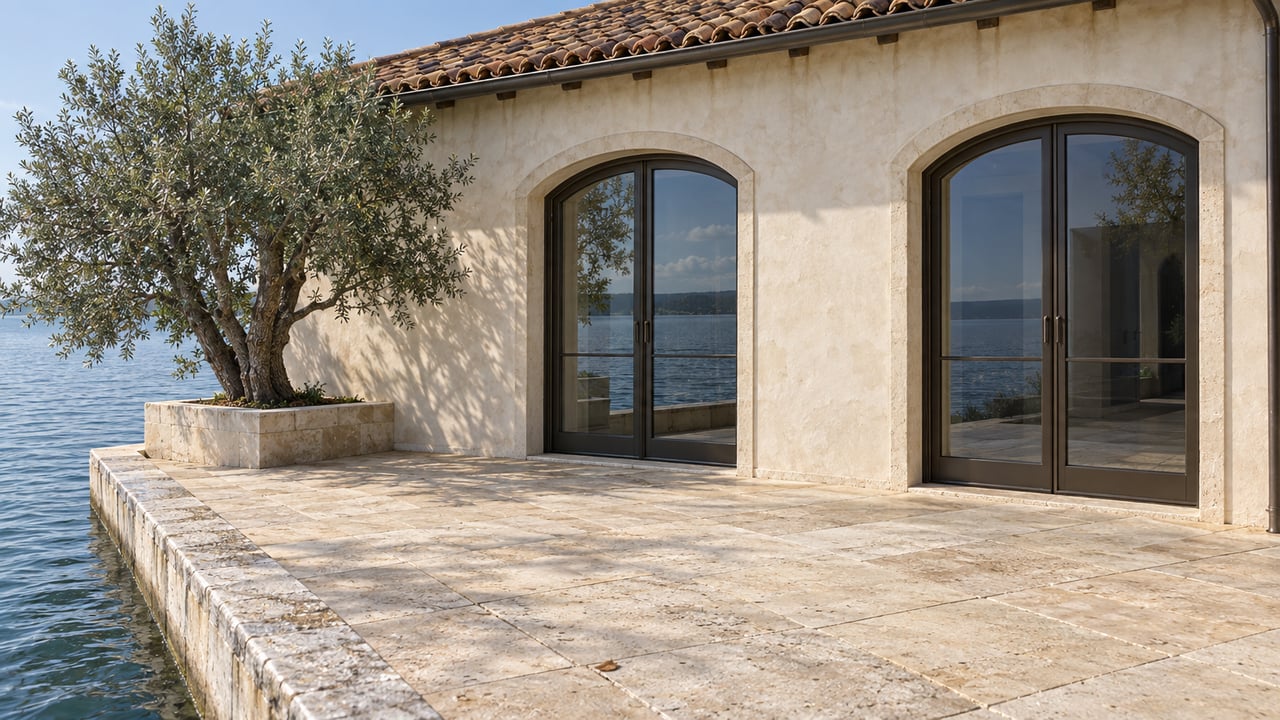
When a listing for a home on Westlake Island describes a private dock as part of the property, what is a buyer actually purchasing? The photo shows the dock at the edge of the patio. The price reflects it. The offer is written around it. None of that makes it real estate.
On Westlake Lake, the dock is a permission slip issued by a private association, not a fixture attached to the deed. That distinction sounds like a technicality until it shows up mid-escrow, and on Westlake Island it shows up often enough that it has become the single biggest reason lakefront sales run long.
A Permit, Not a Fixture
Westlake Lake is privately owned and managed by the Westlake Lake Management Association, known locally as WLMA. Access to the water, including permission to keep a boat, register a dock, or maintain a private mooring, comes through what WLMA's own governing rules call a revocable license. The language matters. A license can be granted, and a license can be taken away.
Under WLMA's Rules and Regulations, a dock permit tied to a lakefront lot does transfer to the next owner when the property changes hands, but only if the seller's account is in good standing at the time of transfer. If dues are unpaid or a violation is unresolved, that automatic transfer doesn't happen the way most buyers assume it will. The dock stays with the water, not the wall, and the water belongs to WLMA.
This is easy to miss because everything about a lakefront listing signals permanence. The dock sits on the parcel. It appears in the MLS photos next to the pool and the primary suite. Nothing on the surface suggests that the right to use it depends on a private ledger most buyers never see until their agent asks for it.
Where the Delay Actually Lives
The consequence of that structure shows up in the timeline, not the inspection report. Recent transaction data on Westlake Island, tracked through mid-2026, shows roughly three of every five sales there running into a contingency extension, and most of those extensions trace back to HOA document review or a dock-related inspection finding rather than anything wrong with the house itself.
Part of the reason is scope. A standard home inspection does not cover a dock or a seawall. Those structures sit outside a general inspector's checklist entirely, which means the physical condition of a feature that's driving real dollars in the sale price can go unexamined until someone specifically asks a licensed marine contractor to look at it. On a house without water access, that's a non-issue. On Westlake Island, where many homes were built between the late 1960s and the mid-1980s, unpermitted dock additions and repairs are a known pattern, and a repair discovered without the required WLMA or city permit tends to surface after an offer has already been accepted rather than before.
That's the sequence that stretches escrow. A buyer's agent orders the marine inspection late because nobody flagged it as a first step. The inspection turns up a repair with no permit on file. Now the timeline includes a negotiation over cost or scope layered on top of the standard document review, and what should have been a straightforward close becomes a contingency extension.
Two Bills, Two Calendars
The paperwork gets more tangled once money enters the picture, because lakefront ownership here means paying into two separate systems that most sellers describe, after living with it, as more confusing than they expected going in.
| Neighborhood HOA | WLMA (Lake Association) | |
|---|---|---|
| Covers | Streets, gates, common landscaping, in some communities pool or clubhouse access | Lake water quality, dam maintenance, dock permitting, boat and fishing badges |
| Billing | Monthly or quarterly | Often annually |
| Typical single-family range | $150 to $500 a month, climbing toward $1,000 or more for gated, lakeside, or full-amenity communities | Lake-use badges run $60 for an adult, $33 for a senior aged 62 or older, and $60 for a guest as of 2026, plus separate dock or slip fees |
Those two invoices rarely arrive on the same schedule, and they come from entities that don't coordinate with each other. A seller pricing carrying costs into a listing needs both figures, confirmed for the specific parcel, not an estimate pulled from a neighboring address. WLMA's own boating rules add texture here too: boats on the lake are capped at 18 feet in length and 8 feet 6 inches in beam, propulsion is electric-only outside a short list of exceptions, and lake speed is limited to 3 miles per hour except for patrol boats. None of that changes a sale price directly, but it shapes what a buyer is actually agreeing to use once the dock permit transfers.
The Number That Predicts a Special Assessment
The other document worth pulling before a lakefront home goes on the market is the HOA's reserve study, and the figure that matters most is how fully funded it is against what it's supposed to hold.
A reserve funded below 70% of its required level is a widely used yellow flag among HOA finance reviewers. It doesn't guarantee a special assessment is coming, but it signals that one is more likely, whether the eventual expense is a clubhouse roof or something tied directly to lake infrastructure like the dam itself. For a buyer comparing two otherwise similar lakefront listings, that percentage is as relevant to long-term cost as square footage.
For a seller, checking it early means finding out about a looming assessment before it becomes a disclosure conversation in the middle of someone else's contingency period.
What Changes If You Check This Before You List
Handling these pieces before a sign goes in the yard turns what is usually a mid-escrow scramble into a pre-market checklist, and pre-market checklists are what shorten time on market for lake-area listings rather than extend it.
Before listing a dock-rights or lakefront home on Westlake Lake, it's worth confirming:
- Your WLMA account is current and in good standing, since that status determines whether the dock permit transfers automatically
- Your dock or seawall's permit history with the City of Westlake Village or the county, especially on structures built before 1990
- Your HOA's most recent reserve study, and whether it sits above or below the 70% funding benchmark
- A marine contractor inspection scheduled ahead of listing, not held in reserve for after an offer arrives
- Current HOA dues and WLMA lake dues confirmed separately, since lenders and buyers typically budget them as one number when they aren't
A Few Questions Sellers Ask First
Does the dock automatically come with a lakefront home when it sells? Not automatically. Dock use runs through a WLMA revocable license, and it transfers to the new owner only if the seller's account is in good standing at the time of sale.
Are HOA dues and lake dues the same bill? No. They come from two different entities on two different schedules, one from the neighborhood HOA and one from WLMA, and both should be verified separately rather than assumed to move together.
If you own a home with lake access or dock rights in Westlake Village and you're thinking about what your listing timeline should look like, Renee Rosen can walk through the WLMA and HOA paperwork with you before the sign goes up, not after an offer is already on the table.